
The History of Bicycles
Scroll below for our Bicycle History Timeline …
Look at whatever takes your fancy …
Great, GOLDEN NUGGETS of ‘Bicycle History’ information lies beneath!!
Scroll below for our Bicycle History Timeline …
Look at whatever takes your fancy …
Great, GOLDEN NUGGETS of ‘Bicycle History’ information lies beneath!!
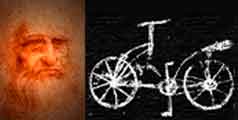
Renaissance artist, scientist and inventor – Leonardo Da Vinci – made sketches (allegedly), of a bicycle prototype.
This was almost 400 years before the bicycle was actually invented.
However, it has been suggested that these sketches are actually fakes.
Perhaps a false start to the History of Bicycles?
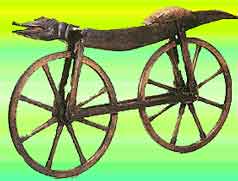
The Celerifere or Velocifere was invented by Frenchman – Comte Mede de Sivrac. The celerifere had a wooden frame and wheels, and no steering apparatus.
It was manually propelled by the feet like a balance bike.

Scottish engineer and road-builder John McAdam invented a road surfacing method – which eventually became known as tarmacadam.
The process of ‘macadamization’ involved building roads with a smooth hard surface that were more durable and less bumpy.
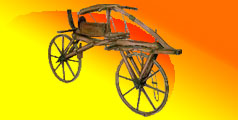
The Draisienne was invented by German – Baron Karl Drais von Sauerbronn. The Draisine was made entirely of wood. It was steerable but had no pedals.
To move forward, a rider would thrust his/her feet against the ground.
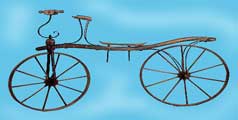
The Hobby Horse was (re)invented by British coach-maker Denis Johnson.
He launched the Hobby Horse in England, describing it as a pedestrian curricle. Like the Draisienne, Johnson’s Hobby Horse had no pedals, but was propelled by the rider’s feet pushing along the ground. There were no brakes and to slow the machine the riders had to drag their feet along the ground.
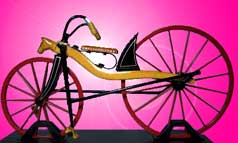
The Macmillan Velocipede was invented by Scotsman, Kirkpatrick Macmillan.
MacMillan’s velocipede was the first bicycle with pedals to drive the rear wheels. MacMillan has cemented his place in the history of bicycles with many crediting him with being the man who invented the modern bicycle.
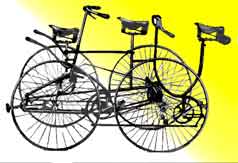
The Tricycle and Quadracycle were manufactured by Willard Sawyer.
Sawyer made a variety of models, from a 6-seater family machine to a lightweight racer. His Promenade and Visiting model ‘preserved evening costume’ and he also made Ladies’, Invalid’s and Children’s models. He built machines for the Emperor of Russia, the Prince Imperial of France, the Crown Prince of Hanover and numerous other members of the aristocracy.
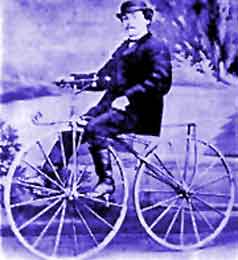
Lallement’s Velocipede was invented by Frenchman, Pierre Lallement.
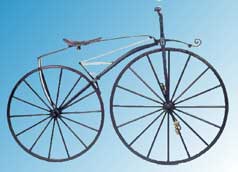
The Michaux Velocipede or Boneshaker, was invented by two Frenchmen, Pierre and Ernest Michaux.
The Michaux Velocipede was powered by pedals and a crank that was connected to the larger front wheel axle.
Frenchman, Gaston Plante, invented the storage battery. Until then an electric vehicle was not really considered a viable option.
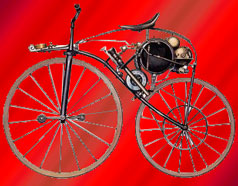
The frame of Michaux’s boneshaker was modified to allow room for the Perraux steam engine.
The bicycle seat was raised, and pulleys and drive belts were added to power the rear wheel.
The first American bicycle college opened in New York.
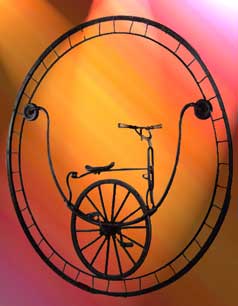
The original monocycle was built by Rousseau of Marseilles.
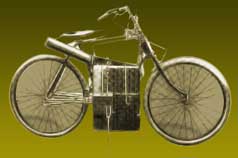
The Roper Steam Velocipede was built by Sylvester H. Roper. The velocipede handlebars had controls attached to them in the shape of twist grips – similar to our modern motorcycle.
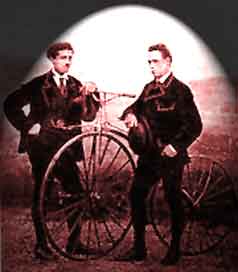
The Paris-Rouen was won by Englishman James Moore.
Moore cycled the 113km distance between the two cities in 10 hours and 25 minutes. He dominated in the cycle-racing scene for several years and was one of the earliest cycling stars.
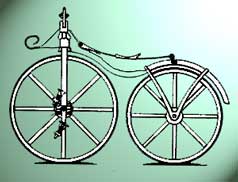
Calvin Witty, an American entrepreneur, acquired Pierre Lallement’s velocipede patent.
He went on to sell the velocipedes to circus performers for use in their acts.
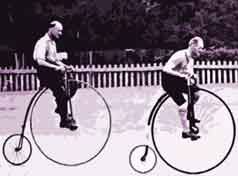
The High Bicycle was invented by Frenchman, Eugene Meyer.
The High Bicycle preceded the Penny Farthing. It had a large wire-spoked tension wheel and a smaller back wheel
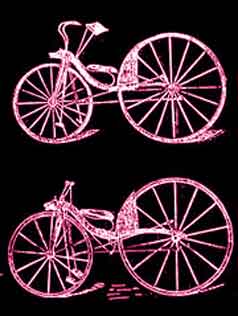
Scottish Cartwright, Thomas McCall, built two versions of a two-wheeled velocipede with levers and rods tossing a crank on the rear wheel.
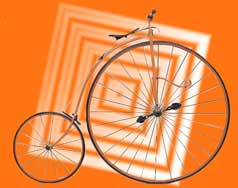
The Penny Farthing or Ordinary Bicycle was invented by Englishman James Starley.
This bicycle, with its large front wheel and smaller rear wheel, gave increased speed and a more comfortable ride for the cyclist.
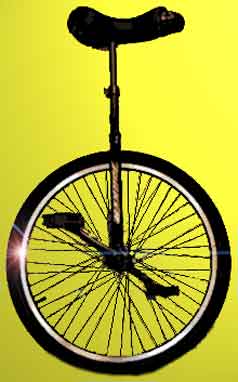
The Unicycle is believed to have evolved as a spin-off of the Penny Farthing.
The theory is, that when cyclists stopped abruptly, the rear wheel of the penny-farthing would rise up off the ground. Some riders began experimenting to see how far they could travel on one wheel and eventually decided the front wheel was superfluous to their needs, and so the unicycle was born.
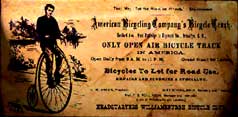
The American Bicycle was made by Pickering and Davis.
This bicycle had hollow steel tubes for lighter weight and featured the first wheel brake.
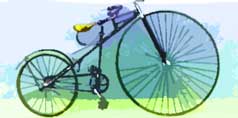
The rear-chain-driven Safety Bicycle was developed in Britain by H. J. Lawson. He obtained a patent for it in 1879.
Lawson designed the rear-chain-driven Safety Bicycle in direct competition to the boneshaker. The two bicycles appear to be similar in construction. However, Lawson’s wooden bicycle wheels were only 23 inches in diameter, earning it the nickname the Sussex Dwarf.
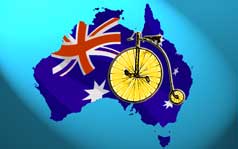
The first Ordinary bicycle was imported into Australia.
Penny Farthings were imported to America by Albert Pope.
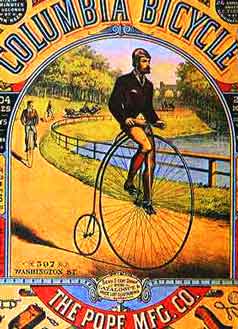
The Columbia Bicycle was designed and manufactured by American Albert Pope.
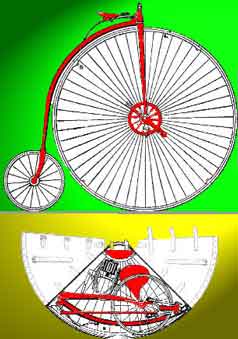
The First Portable Bicycle was created by Englishman, William Grout.
The portable bicycle became the precursor to the folding bike.
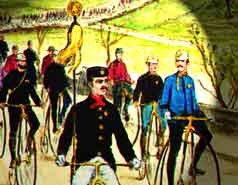
The League of American Wheelmen club was founded.
The League grew substantially and by 1898, had more than 102,000 members, including famous names such as the Wright Brothers, John D Rockefeller and Diamond Jim Brady. The League of American Wheelmen was, (and still is today, under the name of the League of American Bicyclists), an advocate of cyclists rights and improving road conditions for cyclists.
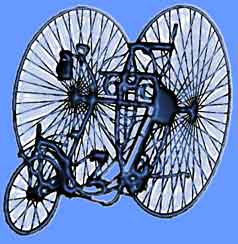
The High-Wheel Tricycle was invented as a safer alternative to the precarious High-Wheel bicycle.
Unfortunately, it was also more expensive too and didn’t take off.
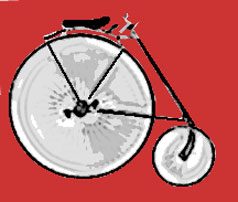
The High-Wheel Safety Bicycle was developed. Its design swapped the small wheel from the front to the back of the bicycle, so that the bike was less likely to tip forward.
Unfortunately, it tended to tip backwards when going up steep hills!
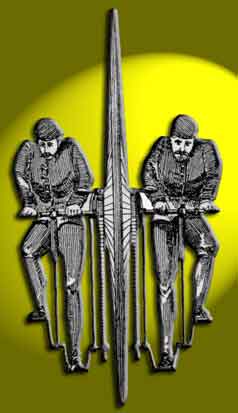
According to The History and Development of Cycles by C.F. Caunter, published in 1955 for the Science Museum by Her Majesty’s Stationery Office…
The Sociable Monocycle was produced by Pearce in 1881.
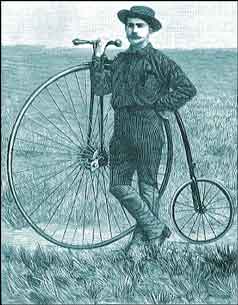
Englishman, Thomas Stevens, was the first person to bicycle around the globe on a Penny-Farthing.
More About Thomas Stevens
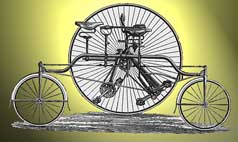
The Rudge Rotary Tandem Tricycle was invented by Englishman, Daniel Rudge.
This unique tandem tricycle was driven by both cyclists and steered by the two small wheels, which were interlinked by rods. Propulsion came from the big wheel.
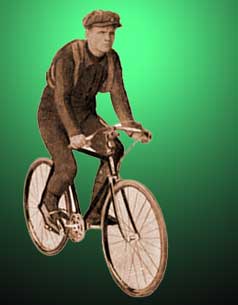
The Rover Safety Bicycle was invented by Englishman, John Kemp Starley. The bicycle he designed had two wheels of equal size, with a chain drive to the rear wheel and an adjustable saddle.
In 1888 John Kemp Starley created the Starley Rover which changed the history of bicycles completely. It was so popular, it became the common template for the shape of bicycle frames for the next 60 years.
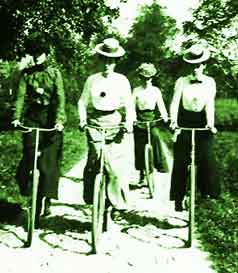
With social Revolution and the suffragette movement, the bicycle became increasingly popular.
Competitive cycling also took off.
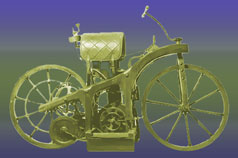
Gottlieb Daimler fitted an internal combustion engine to a wooden frame to create a motorized cycle.
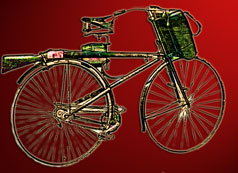
The British army began using bicyclists as scouts during Easter Manoeuvres.
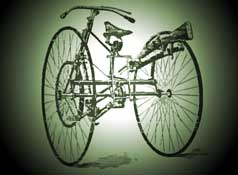
The French army formally added bicycles to military service.
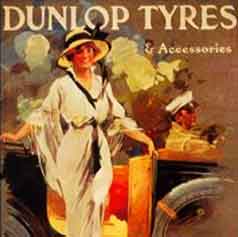
Dunlop Pneumatic Tyres were invented by Scotsman, John Boyd Dunlop.
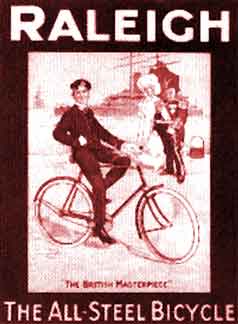
Raleigh Cycles was started in England by Sir Frank Bowden.
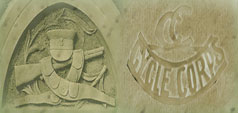
The British army formally established the 26th Middlesex Cyclist Volunteer Corps.
The bicycle was found to be invaluable for reconnaissance and communications work, being lighter, quieter, and logistically much easier to support than horses.
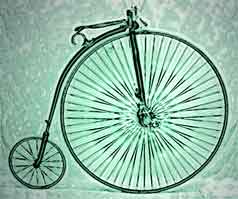
The Springfield Roadster was a 50-inch Highwheel Safety.
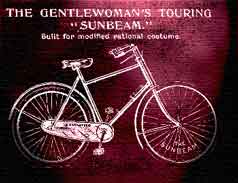
The Sunbeam Bicycles Company was founded by John Marston.
The company got its name when Mrs Marston noticed the sun reflected in the high gloss finish of the bicycle frame and thereafter the bicycle became known as The Sunbeam.
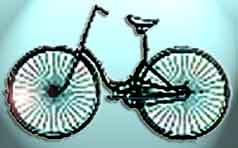
A bicycle with a back-pedal brake was patented by Daniel Stover and William Hance.
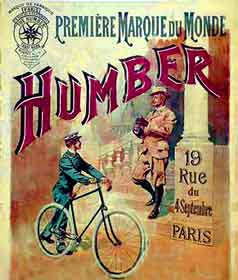
The Humber Car Manufacturer designed and produced the Humber bicycle.
It was a classic design for a bicycle and consequently, the majority of subsequent bicycles were based on this design. In 1932 Humber sold the brand to Raleigh, who continued using the Humber brand name into the 1970s.
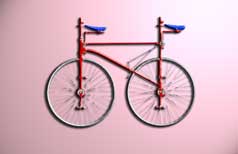
The Tandem Velocipede was patented by Henry Barr and Frank Peck.
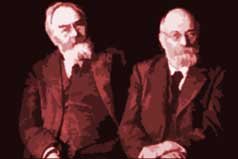
Andre and Eduoard Michelin invented the first detachable pneumatic bicycle tyre.

The first military use of bicycles in the USA occurred with the formation of the Connecticut National Guard Signal Corps.
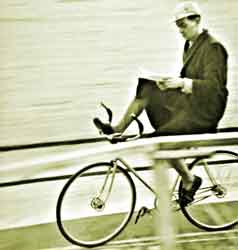
The first International 6-Day Bicycle Race was held in the USA at Madison Square Garden in New York City.
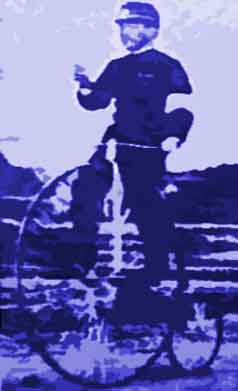
In Japan, the ‘Ministry of Communications’ began using the bicycle in the delivery of telegrams.

The Davis Sewing Machine Company owned by George P. Huffman began producing Huffy bicycles at their factory in Ohio.
This was to become the Huffy Corporation.
More Huffy Bicycle History
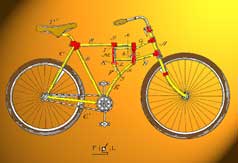
The First Folding Bike patent was applied for by American, Michael B. Ryan.
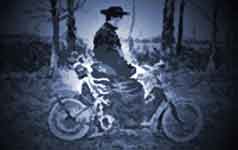
The Fautenil Velocipede was classified as a separate type of bicycle, although recumbent style bicycles had been existence earlier.
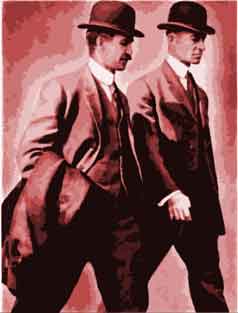
The Wright brothers, Orville and Wilbur, opened their bicycle shop in Dayton, Ohio.
It was called the Wright Cycle Exchange and later became the Wright Cycle Company. The brothers started with the sales and repair of bicycles and then developed their own brand for manufacture.
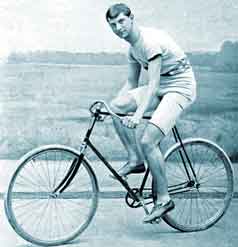
American, Arthur Augustus Zimmerman, won the first world championship in a sprint cycle race.
Zimmerman was one of the world’s greatest cycling sprint riders and won over 1000 races across the USA and Europe.
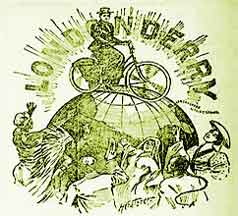
Annie Cohen Kopchovsky was the first woman to cycle around the world, making bicycle history.
Adolph Arnold and Ignaz Schwinn began manufacturing its famous Schwinn Bicycles.
The company was known as Arnold, Schwinn and Company Incorporated.
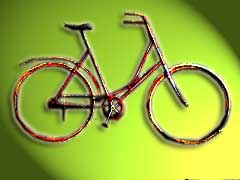
The Shelby Cycle Company began producing the Ideal Bicycle, a pneumatic-tyred safety bike.
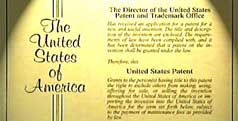
A US patent was granted to Ogden Bolton Jr, for his Battery-Powered Bicycle.
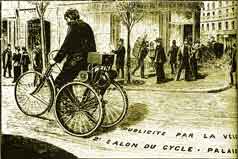
The Street-Printing Tricycle made its debut in France. The tricycle was designed with a rear attachment that comprised two inking rollers and a tank for a gravity-fed ink supply. The wheels of the tricycle were solid rubber and contained the message lettering.
As the bicycle was propelled forward its wheels were inked and thus rolled a message onto the pavement.
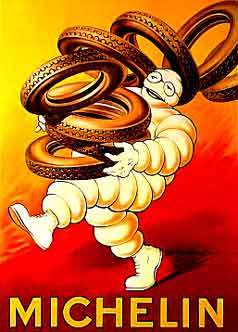
In France, the Michelin Brothers improved on Dunlop’s tyre by giving it a beaded edge and making it more suitable for motor vehicles.
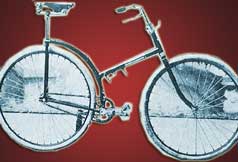
A Folding Bicycle for the French Infantry was created by Captain Gerard Morel.

The first U.S. women’s six-day bicycle race was held at Madison Square Garden, in New York City.
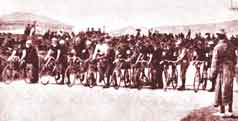
The first Olympic Bicycle Race was held in Athens, Greece.
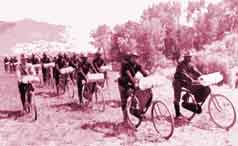
The 25th Infantry Bicycle Corps was formed at Fort Missoula, Montana.
The troops rode special bicycles built by A. G. Spalding.
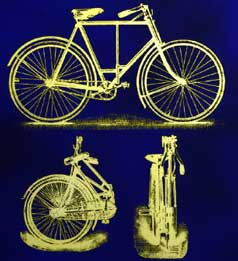
The Faun Folding Cycle was invented by Englishman William Crowe. It was patented in 1899.
The bike was unique because it featured folding handlebars that integrated a brake mechanism.
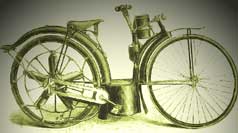
A Motorized Bicycle was invented by Felix Millet Theodore.
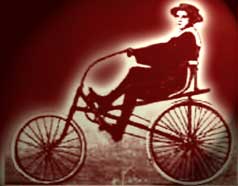
The Challand velocipede design is identifiable as the prototype for our modern recumbent bicycles.
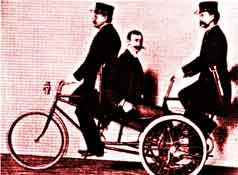
The Police Bondage Tricycle was designed and built by the Davis Sewing Machine Co. It was used to transport prisoners and was fitted with restraints.
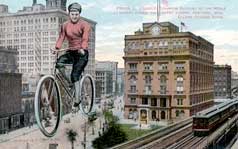
The coaster brake was fitted onto bicycles.
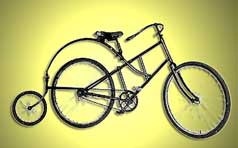
1898 – Rex Bicycle
The Rex Bicycle was the invention of Bohn C. Hicks of Chicago, Illinois, who assigned his rights to the Rex Cycle Company. Mr Hicks submitted the reason for his unusual design was so that the bicycle was ‘particularly adapted to absorb or minimize the shocks incident to riding over obstructions.’
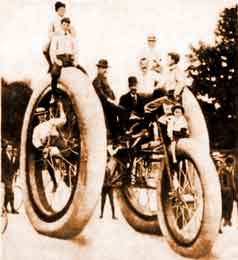
The Giant Eight-Man Tricycle was a trike, made by the Boston Woven Hose and Rubber Company as a business publicity stunt.

The Rear Wheel Drive Electric Bicycle was patented by Matthew J Steffens.
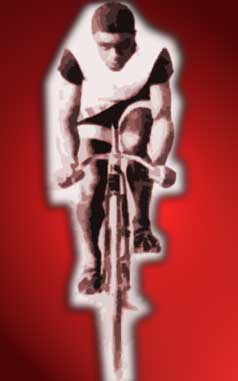
Marshall W.Taylor, (commonly known as Major Taylor), was one of the first black American elite athletes. Between the years 1895 and 1904, Taylor became celebrated as the fastest bicycle rider in the world. He extensively travelled the world to compete in cycling races.
In 1900, (after years of racial discrimination), Major Taylor was finally permitted to enter into the national championship series. He won the series and became the American sprint champion.
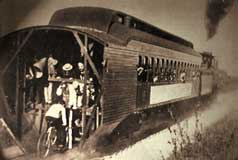
American, Charles M. Murphy, also known as ‘Mile A Minute Murphy,’ set a world speed record when he covered a mile in 57.8 seconds on his bicycle. Murphy laid down about three miles of planking between some railway tracks and had a shield built to attach to the rear carriage of a locomotive. During the record attempt, he rode his bicycle flat out along the planking, in the slipstream of the locomotive shield, which provided him with a measure of wind resistance.
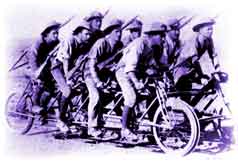
A Cycle Corps was utilized in the Boer War. The Cycle Corps were used as messengers, patrols, scouts and railway defence. By 1901, 13,000 cyclists had served.
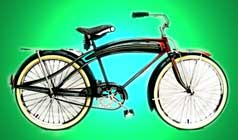
The Dayton Special Roadster Bicycle was manufactured by the Davis Sewing Machine Company.
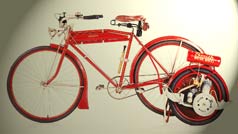
The Hendee Manufacturing Company began producing Indian bicycles. The Indian Motorcycle Company was then created to build the bicycles.
However, it was not until 1902 that the company began manufacturing the more famous motorcycles.
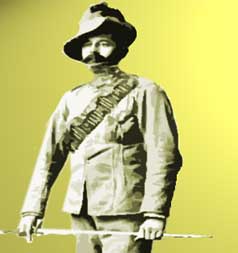
The Cape Colony Cycle Corps, a unit of 500 troops, was formed in South Africa. The corps main work involved with despatch-riding, linking between cavalry and infantry, reconnaissance, carrying mail and stores in rucksacks, and even transporting carrier pigeons.
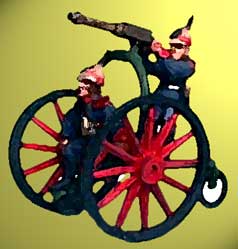
Vickers and Maxim built a two-man military tricycle. The tricycle had two machine guns and 1000 rounds ammunition attached.
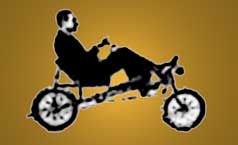
The American designed Brown recumbent was a precursory to our contemporary recumbent – despite being ridiculed and lambasted on its release into the marketplace.
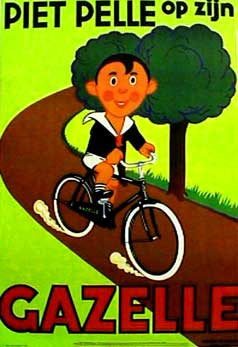
The Gazelle Bicycle was sold to the public by the Dutch company, Arentsen and Kolling.
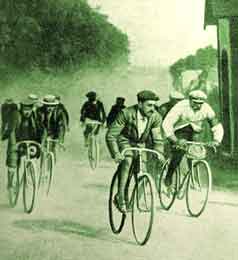
The Tour de France cycling race was held for the first time ever. It was won by Italian-born Frenchman, Maurice Garin.
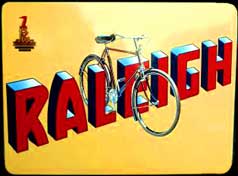
Raleigh created a bicycle, equipped with a Sturmey Archer 3-Speed hub.
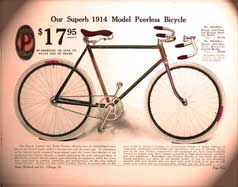
Mass production of the bicycle meant that it became a cheap and practical form of personal transport.
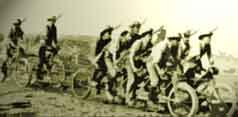
During the first world war, the British military utilised 14,000 cyclists in a variety of bicycle regiments and battalions.
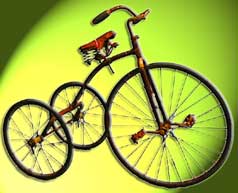
The Colson Bicycle Company formed when Fred Colson merged the Worthington, Fay, and Fairy businesses into one company. The business became well renowned for its extensive production of tricycles for adults, children and handicapped people. The company was eventually come to be called Evans-Colson and finally just Evans.
The Nichibei Fuji Cycle Company Ltd was formed by the merger of Nichibei Trading Company and a Japanese Mechanical Engineering company.
Nichibei Fuji Cycle Company began the production of bicycles for the Japanese domestic market.
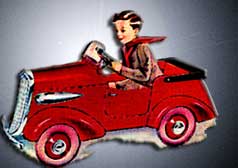
Lines Brothers acquired The Unique and Unity Cycle Company. They originally made bicycles for adults, children’s tricycles and bicycles and pedal cars.
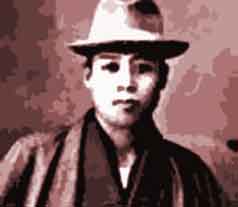
Shozaburo Shimano established the Shimano Iron Works and began production of the bicycle freewheel.
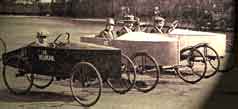
The Velocar was invented by Frenchman Charles Mochet.
Mochet’s velocar had the comfortable seating position and the trunk of a car, with the pedal propulsion of the bicycle. The technical equipment included a differential, three gears and a light fairing made of the aeroplane windshield material Triplex.
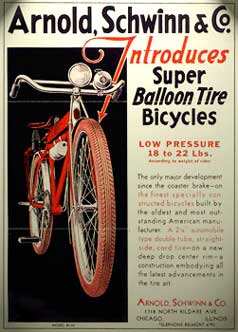
The Cruiser Bicycle was developed by Schwinn.
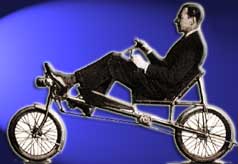
Charles Mochet developed the Recumbent bicycle, based on the same ergonomic principles as his earlier velocar.
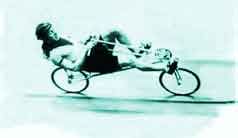
The world’s fastest bicycles – recumbent bicycles – were banned from competing by the UCI after Francis Faure rode 45.055 km (27.9 miles) in one hour on a Paris velodrome smashing an almost 20-year-old standing record.
The recumbent was denounced as an illegal bicycle and banned forever from competing against upright bicycles in the sport.
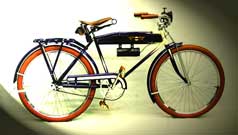
Schwinn developed the B-10E Boys motorbike.
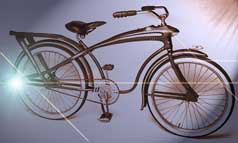
The sleek Elgin Bluebird was produced from 1935 to 1937.
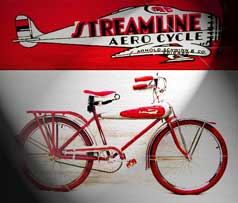
Schwinn released the Streamline Aero-Cycle onto the market.
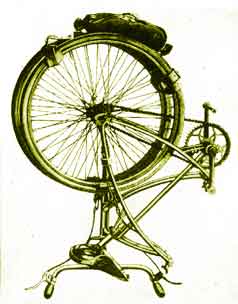
The Birmingham Small Arms Company started manufacturing military bicycles including the folding paratrooper bicycle.
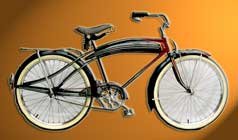
The Dayton Super Streamline was fashioned by the Huffman Bicycle Company.

The Derny Motorized Bicycle – built by Roger Derny et Fils.
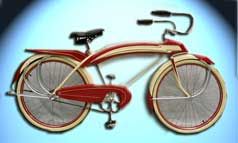
Shelby released the stylish Airflow Bicycle.
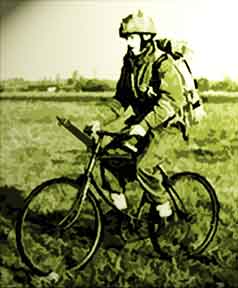
During World War II, American Military Bicycles were built by the Westfield and Huffman (Huffy) Companies.
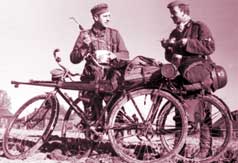
Throughout WWII, the German occupiers in Holland forbad the use of bicycle taxis.
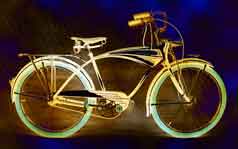
The Schwinn Auto Cycle Super Deluxe was created.
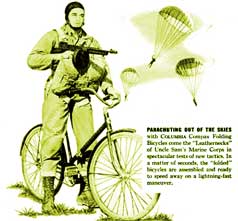
Columbia created the Compax bicycle for military use by paratroopers. It was a disassembling bicycle.
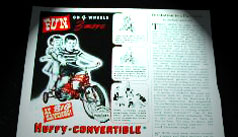
The Huffy Convertible Children’s Bicycle revolutionized the kids’ bikes market.
More Huffy Bicycle History
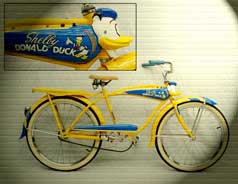
The Shelby Donald Duck, in both boys and girls designs, hit the streets.
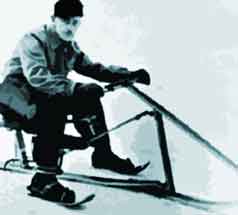
The Sitzski Snowbike was patented by Engelbert Brenter, founder of the Brenter Snowbike Company.
The ‘Sitzski’ was the forerunner of the contemporary Snobike.
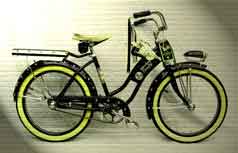
The H.P. Snyder Manufacturing Company produced the Rollfast model Hopalong Cassidy.
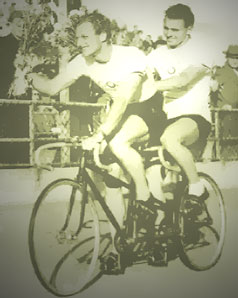
The Australian duo, Russell Mockridge and Lionel Cox, won Olympic Gold at Helsinki in the 2000 metres tandem event. Mockridge and Cox came together as a team only days before the event.
Mockridge was a champion cyclist and Cox was a cycling unknown who had never taken part in a tandem event in his life! A week later they rode their way to a gold medal.
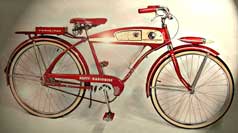
The Huffy Radio Bicycle had a built-in radio for music lovers.
More Huffy Bicycle History
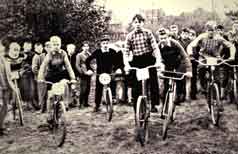
The first organized BMX Races were held in the Netherlands.
BMX riding was invented in Holland by kids who tried to emulate their motocross heroes using their bicycles. One of the first ever Bicycle Motocross riders was Ton van Heugten. Ton went on to become a world champion in sidehack racing. (BMX stands for Bicycle Motocross.)
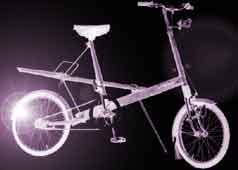
The Moulton Bicycle Company was founded by Dr Alex Moulton, who created the revolutionary small wheel design.
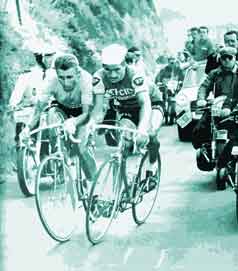
Frenchman and road racing cyclist Jacques Anquetil, became the first 5-time winner of the Tour de France.
His winning streak began in 1957 and continued from 1961 to 1964.
Jacques also realized a swag of other achievements including, in 1960, being the first French rider to win the Giro d’Italia.
In 1961, he became the first Frenchman to sport the yellow jersey of the Tour de France from the opening day to the final day, and in 1963 he became the first rider to win all three Tours, with victory in the Vuelta.
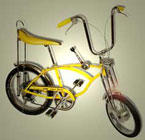
The Schwinn Sting-Ray Muscle Bike or Lowrider was released by Schwinn and customised by the ‘Custom King’, Sean Johnson.
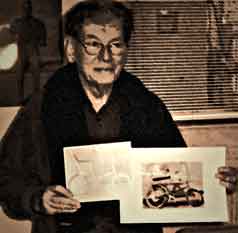
The original Chopper bicycle, (a children’s bicycle), was designed by Dr Tom Karen at Ogle Design.
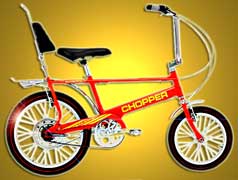
Raleigh launched its Chopper bicycle – a children’s bicycle – into the US market.
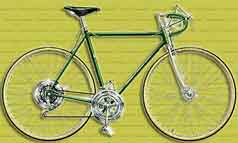
The 1970s saw a boom in the Ten Speed Bicycle industry.
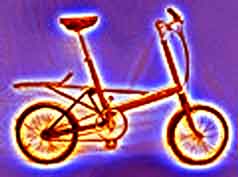
The Moulton Bicycle Company produced the Moulton Mark III, 3 Speed Bicycle.
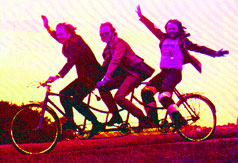
Between 1970 and 1982, the hit British series The Goodies, featured the cast Tim Brooke-Taylor, Graeme Garden and Bill Oddie, travelling around on a three-seater bicycle called the ‘Trandem’.

The Cannondale Company was founded in the USA by Joe Montgomery.
More Cannondale Bicycle History
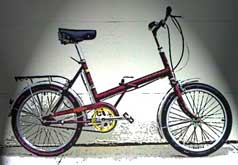
Raleigh introduced the Twenty Stowaway Folding Bike.
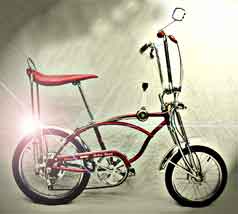
Schwinn released its immensely popular Apple Krate Sting Ray.

The Giant Bicycle Company was started in Taiwan, by engineer King Liu.
More Giant Bikes History

The first major BMX race was started by Scot Breithaupt in the USA.
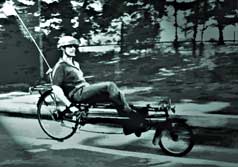
US-based engineers, Chester Kyle and David Gordon Wilson of MIT, are acknowledged as the fathers of the modern recumbent movement.
More About Recumbent Bicycles

Specialized Bicycle Components Inc was founded by Mike Sinyard.
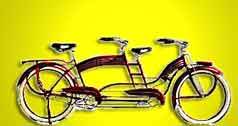
English couple, Veronica and Colin Scargill completed a tandem bicycle ride around the world. This was an amazing 18,020 miles or 29,000km.
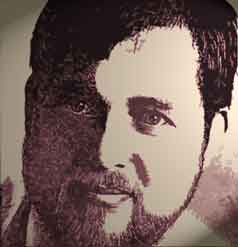
Klein Aluminium Bicycle Frames were conceptualised and designed by MIT graduate, Gary Klein.
More Klein Bicycle History
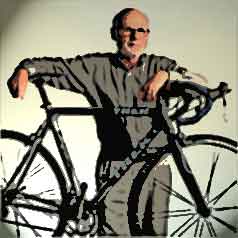
The Trek Bicycle Corporation was established in America, by Richard Burke and Bevil Hogg.
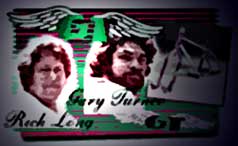
GT Bicycles was founded by Richard Long and Gary Turner.
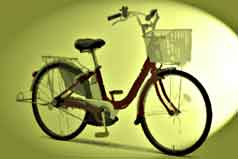
The Series Hybrid Bicycle (SH) was created by Augustus Kinzel.
This type of bike is powered by the cyclist charging up a generator via the pedals. Pedal energy is transformed into electricity and can be fed straight into the motor.
Today, these are called Pedelecs, and they only supply power when the cyclist is pedalling, unlike an electric or e-bike, which can supply constant power from the battery.
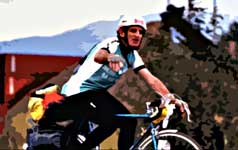
Canadian, John Hathaway, undertook a 50,600 mile or 81,433km bicycle tour of every continent in the world. It took him 23 months to complete and made the Guinness Book of Records.
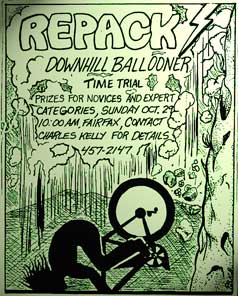
The Repack Downhill Race was the first great mountain bike event. It was organized and promoted by Charlie Kelly and Gary Fisher.

Pacific Cycle was founded by Chris Hornung.
The company is now owned by Dorel Industries and is a major distributor of many brands including: DYNO, GT, InSTEP, Mongoose, Murray, Pacific Outdoors, Powerlite, Roadmaster, and Schwinn.
The Kelly-Fisher Mountain Bikes Company was started up by Gary Fisher and Charlie Kelly. Kelly and Fisher are considered to be the fathers of the sport of Mountain Biking.
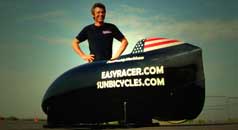
Fast Freddie Markham set a bicycle speed record of 81.8 kph over 200m in a Human Powered Vehicle (HPV).
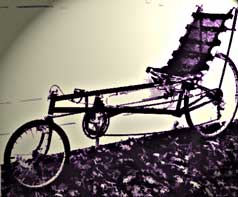
The Avatar 2000, a long-wheelbase (LWB) recumbent bicycle was designed by MIT’s David Gordon Wilson and is considered the first modern production recumbent.
More About Recumbent Bicycles

The establishment of an international unicycling federation (IUF) was proposed by German-born unicyclist promoter Jack Halpern.
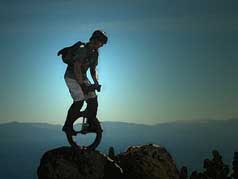
Off-Road Unicycling (Muni) is an extreme unicycle sport that was devised by pioneer, Kris Holm, one of the most skilled mountain unicyclists on the planet and the most famous in unicycling history.
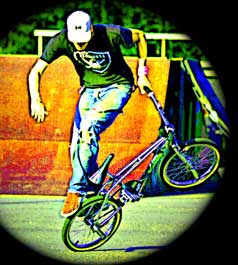
The 1980s saw the creation of the Freestyle or Trick bicycle style of BMX riding. It allegedly originated in San Diego with teenager BMX riders Bob Haro, Kyle Miller, John Swanguen and William Crazy Lacy Furmage. There were five separate disciplines created. They were street, park, vert, trails or dirt jumping, and flatland.
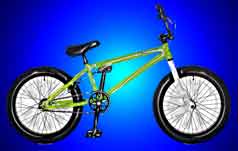
The International BMX Federation was founded.
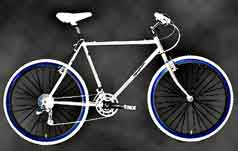
Specialized Bicycle Components Inc produced an all-terrain mountain bike – the fat-tired and lightweight, 15-gear Stumpjumper.
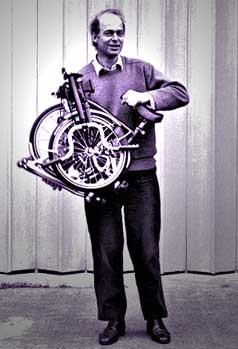
The Brompton Folding Bike was created by Andrew Ritchie. In April 1987 his folding bicycle design won the Best Product award at the International Cyclex Exhibition.

The Dahon Folding Bicycle was created and produced by Californian-based physicist Dr David Hon.
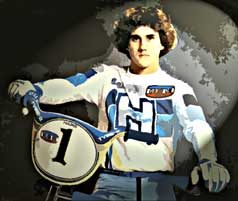
Bob Haro developed the BMX Haro Freestyler.

First BMX World Championships were held in Dayton Ohio, USA.
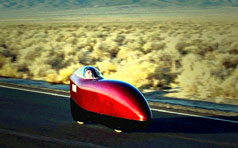
The First European Human Power Championships were held.

The First World Unicycling Convention and Championships (UNICON) was held in Syracuse USA.

Avanti Bikes started out in New Zealand in 1985, then in 1991 Avanti established another arm of the company in Australia.
Since then, Avanti has built up its collection of diverse bicycles to over 80 different models that supply all sections of the cycling community.
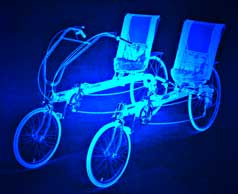
The Linear Recumbents Bicycles Company was founded in Iowa by Dirk Kann.
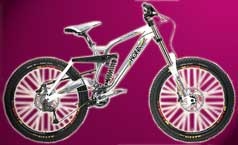
The Kona Bicycle Company was established by Jacob Heilbron, Dan Gerhard and Joe Murray.
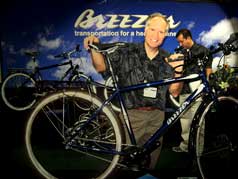
Joe Breeze was inducted (along with others) into the Mountain Bike Hall of Fame, for the central role he played in the design and development of mountain biking.
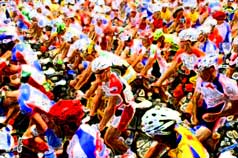
In London, 31,678 cyclists set a record when they undertook a collective bicycle tour.
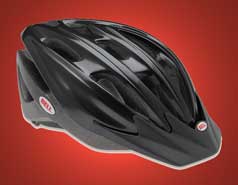
Australia passed the world’s first Bike helmet legislation, compelling cyclists by law to wear helmets.
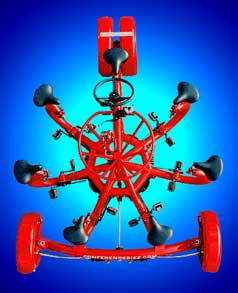
Eric Staller created an 8-person bicycle called the Conference Bicycle.
The Electra Bicycle Company was started by German-born Benno Baenziger and Jeano Erforth.
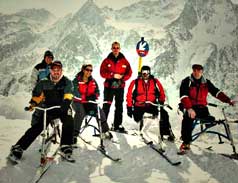
Swiss Skibob Association changed its name to Swiss Snow Bike Association.
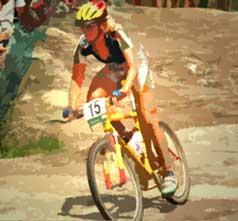
Olympian Paola Pezzo won a gold medal in mountain biking. She also won gold again at the Sydney 2000 Olympics.
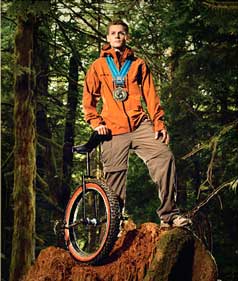
Street Unicycling was invented by Dan Heaton. Street Unicycling is a form of riding that combines freestyle and trials.
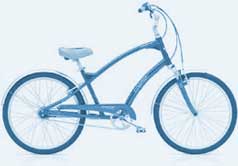
The Electra Flat Foot Technology Townie Bike was an innovation in bicycle design.
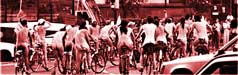
In Spain, a naked cyclist demonstration was organised by Coordinadora de Colectivos Ciclonudistas de Aragon who claimed the protest was …
“A defiance to the established power and a bet for civil disobedience. Stop the dependence on oil! Down with the pollution! Down with the textile industry! Naked in front of traffic against the oil and car dictatorship and its wars. Reclaim the streets for the people.”
It was the third such event in Spain.
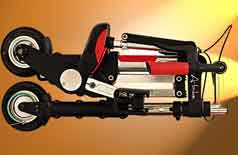
The A-bike Folding Bicycle was invented by Englishman Sir Clive Sinclair.
It weighed a mere 5.5 kilograms and fitted in a bag.
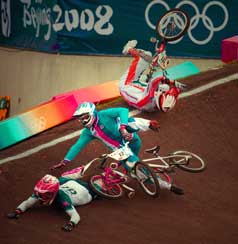
BMX bikes joined the Beijing Olympics.
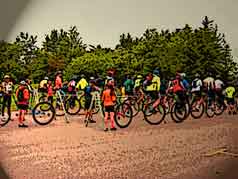
Ride the Lobster, the world’s first multi-stage unicycle race, was held in Nova Scotia.
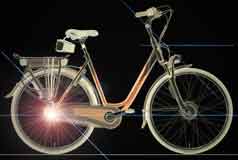
Gazelle created history in 2009 when it won the prestigious Dutch Bike of the Year award with its Chamonix Innergy electric bicycle.
This was the first time that an electric bike had collected the esteemed award.
Well …
Did it make your head SPIN?
Now you’ll be the life of the party,
Able to challenge and boast to your neighbours for years to come.
People will be ASTOUNDED at your incredible intelligence.
Be BLOWN AWAY by your depth of historical knowledge.
You will be the ENVY of the town!
You may also start WINNING at Trivial Pursuit …
Thirsty for MORE Bicycle History?
Check out our COMPREHENSIVE page on ‘Who Invented The Bicycle’.
Or read about Thomas Stevens – the first man to circumnavigate the globe – on his Penny Farthing!